When a Cheap Lot Is Not Cheap: Utility Assessments on a Cape Coral Acquisition
A Cape Coral lot where headline price and all-in land basis diverge — assessments, connection costs and site work reframe the economics.
This acquisition profile examines asset strategy, underwriting method, transaction structure, and value-creation considerations. Counterparty and pricing details are not disclosed.
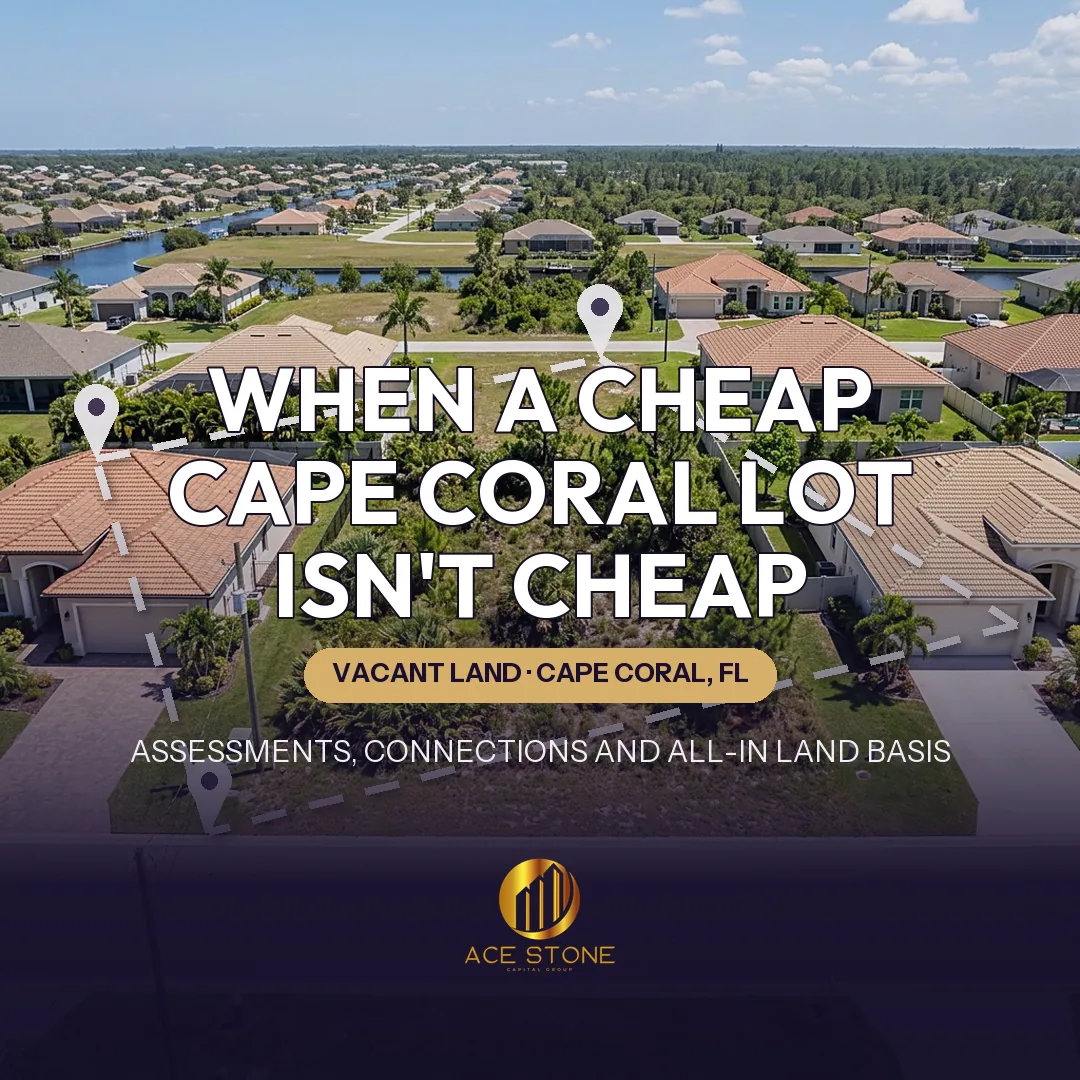
Representative imagery of the asset type and market — not a photograph of the subject property.
Case Context
This acquisition profile examines AceStone Capital Group's underwriting method for a parcel of this type. Specific properties, owners, and pricing are not identified. The subject profile is an interior vacant residential lot in Cape Coral that presents attractively on headline purchase price relative to nearby lots, in a city where a multi-decade utility extension program means two adjacent lots can carry entirely different cost obligations.
Parcel Profile
The subject is a standard platted interior lot on a paved city street, rectangular, flat, and vegetated with the palmetto and slash pine regrowth typical of long-vacant Cape Coral parcels. Neighboring parcels on the block face carry newer single-family residences with mature landscaping, indicating a block that has already absorbed most of its infill capacity and an environment builders are actively working in.
A headline purchase price is the first of several numbers, not the only one. The analysis is built to answer a single question: what is the all-in land basis a builder must carry before the first foundation dollar is spent? That figure includes the purchase price, any unpaid or pending utility assessment obligation, capital expansion or impact fees, physical connection cost, and the site work required to make the lot a construction site. Two lots with identical asking prices can differ materially once these are added.
Utility Assessment Status
Cape Coral's utility extension program levies assessments against benefited parcels, and a lot's status can be pre-assessment, assessed with a balance payable in installments, assessed and prepaid, or outside a currently funded phase entirely. Diligence establishes which of these applies by reference to city assessment records and the tax roll, identifies whether an installment balance runs with the land at closing, and confirms whether an unassessed lot sits inside a phase already scheduled. A lot priced as though it were fully served, but sitting outside a funded phase, is the most common source of basis error in this market.
Separate from the assessment, capital expansion or impact fees are typically due at the time service is requested or a permit is pulled, and they are not covered by an assessment payoff. Physical connection adds further cost: the water service tap and meter, the sewer lateral from the main to the property line and then to the structure, any required grinder pump or low-pressure connection where the collection system requires one, road-cut restoration where applicable, and electrical service and any temporary power for construction. Each item is verified with the utility rather than estimated from a neighboring lot's experience.
Site Preparation, Fill and Drainage
Cape Coral's flat, low-relief terrain means the pad must frequently be raised, and imported fill priced by the truckload at prevailing haul rates is a material line item, not a contingency. The site-work budget also carries clearing and grubbing of the existing vegetation, stump removal and disposal, rough and finish grading, swale and drainage work to satisfy the city's stormwater requirements and avoid discharging onto neighbors, and construction access. Where the parcel is in a special flood hazard area, minimum finished-floor elevation drives fill volume directly and must be established before the fill number is credible.
Buildability review confirms zoning and dimensional compliance, setbacks against the platted lot geometry, any recorded easements affecting the buildable area, and the permitting sequence the city requires. Where a lot is buildable only with septic and a private well because sewer is not yet extended, that path is priced separately — including permit feasibility, soil suitability, area consumed by the drainfield, and the effect on eventual resale to a builder who may prefer central service.
Comparable-Lot Pricing
Comparable analysis normalizes closed sales to an all-in basis rather than a headline price. A closed sale of an assessed, prepaid, sewer-available lot is not comparable to an unassessed lot on the next street without adjusting for the obligation difference. Adjustments also address lot width, waterfront or Gulf-access status where relevant, canal frontage and seawall condition, corner position, and flood zone designation.
Builder Economics and Residual Value
The residual framework then applies. Supportable finished home value on the block, less construction cost at the specification the block supports, less site work and connection, less permits, fees and carry, less selling cost and required margin, produces the maximum all-in land basis a builder can support. The purchase price AceStone can offer is that ceiling less every obligation the lot carries. Where assessments and fill are heavy, the offer price falls even though the underlying land value has not changed — the obligations have simply been reallocated from the buyer's future budget into today's price.
Acquisition Basis and Key Risks
Basis is stated as all-in, and every component is verified in writing before it is relied upon. The principal risks are an assessment balance discovered after contract, a flood-zone designation that increases required fill, a sewer connection requiring a grinder system, unrecorded fill or debris on the parcel, and permit timing that extends carry. No pricing, margin or return figures are represented on this page.
Key Takeaways
A discounted purchase price disappears quickly once assessments, expansion fees, connection cost and fill are included. Basis should always be measured all-in. Cape Coral landowners can review acquisition terms on the land acquisition desk.
What This Case Shows
A structured example of how AceStone Capital Group sources, underwrites, and structures off-market land acquisitions in Cape Coral, FL. For broader context, see our active acquisition markets and the land acquisition framework behind every position.
Have a Property to Sell?
Receive a written offer or a clear pass within 1–2 business days.