
Back
    Residential U.S. Growth Markets March 2026

    Why Infill Lots Are Outperforming in Growth Corridors

    Across high-migration U.S. metros, infill residential lots are quietly emerging as one of the most resilient segments within the land asset class. While large-scale development tracts often require extended entitlement timelines, infrastructure buildout, and capital layering, infill lots offer something increasingly scarce: certainty.

    This acquisition profile examines asset strategy, underwriting method, transaction structure, and value-creation considerations. Counterparty and pricing details are not disclosed.

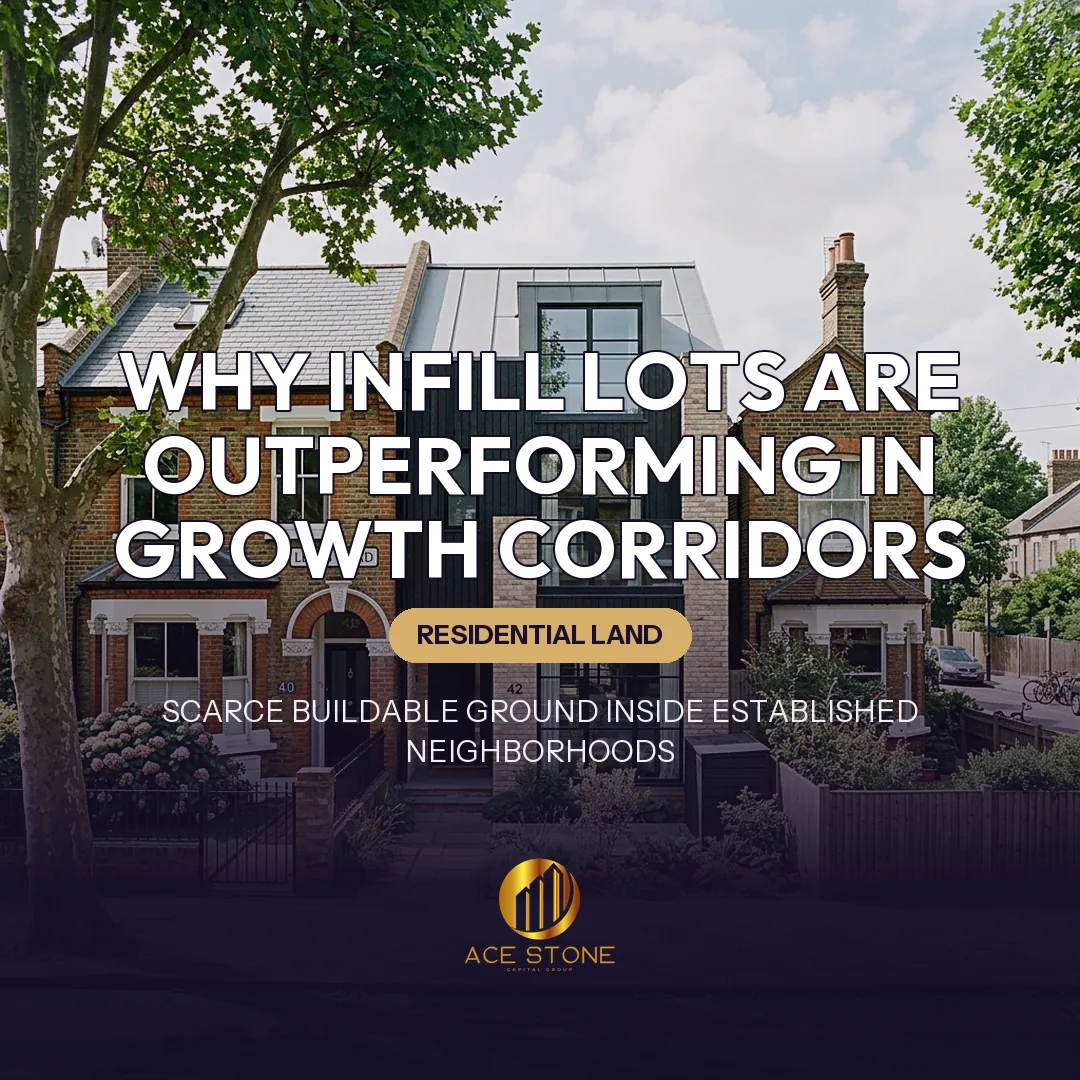
    New infill residential construction between older homes in an established neighborhood.
    Representative imagery of the asset type and market — not a photograph of the subject property.

    Market Dynamics

    In markets such as Dallas-Fort Worth, Charlotte, Phoenix, and Tampa's surrounding corridors, builder activity remains strong but selective. Rising construction costs, regulatory friction, and financing constraints have caused many developers to prioritize parcels that are already buildable or located within established neighborhoods. Infill lots — particularly those within school districts, employment hubs, or transportation corridors — trade at premiums because they reduce execution risk.

    Structural Advantages of Infill Parcels

    Unlike speculative raw land, infill parcels often benefit from existing utility access, confirmed zoning compatibility, established comparable home sales, and immediate buyer demand. These attributes compress development timelines and reduce underwriting uncertainty for builders and capital allocators alike.

    Applied exampleSee how this played out in Principal Acquisition: Inherited Single-Family Home, Charlotte Metro — a residential acquisition in Charlotte, NC.

    Builder Demand & Negotiating Leverage

    In supply-constrained submarkets, builders are frequently willing to compress margins in exchange for speed and predictability. This dynamic shifts negotiating leverage toward landholders who control shovel-ready sites.

    Migration & Supply Constraints

    As migration patterns continue favoring tax-efficient and job-growth states, infill inventory in secondary and tertiary markets is becoming structurally limited. The result is pricing durability — and in many cases, accelerated absorption.

    Applied exampleSee how this played out in Off-Market Residential Acquisition: Out-of-State Owner, Tampa Bay — a residential acquisition in Tampa, FL.

    Strategic Positioning

    For disciplined capital allocators, infill residential land represents a strategic intersection of liquidity, builder demand, and supply imbalance.

    What This Case Shows

    A structured example of how AceStone Capital Group sources, underwrites, and structures off-market residential acquisitions in U.S. Growth Markets. For broader context, see our active acquisition markets or initiate a direct-sale review for a similar property.

    Have a Property to Sell?

    Receive a written offer or a clear pass within 1–2 business days.

    Request a Cash Offer