
Back
    Residential U.S. Growth Markets March 2026

    The Migration Effect: How Population Shifts Drive Lot Demand

    Residential land values do not move randomly. They respond to migration, employment expansion, infrastructure investment, and capital flow. Over the past decade, domestic migration trends have reshaped the U.S. housing map.

    This acquisition profile examines asset strategy, underwriting method, transaction structure, and value-creation considerations. Counterparty and pricing details are not disclosed.

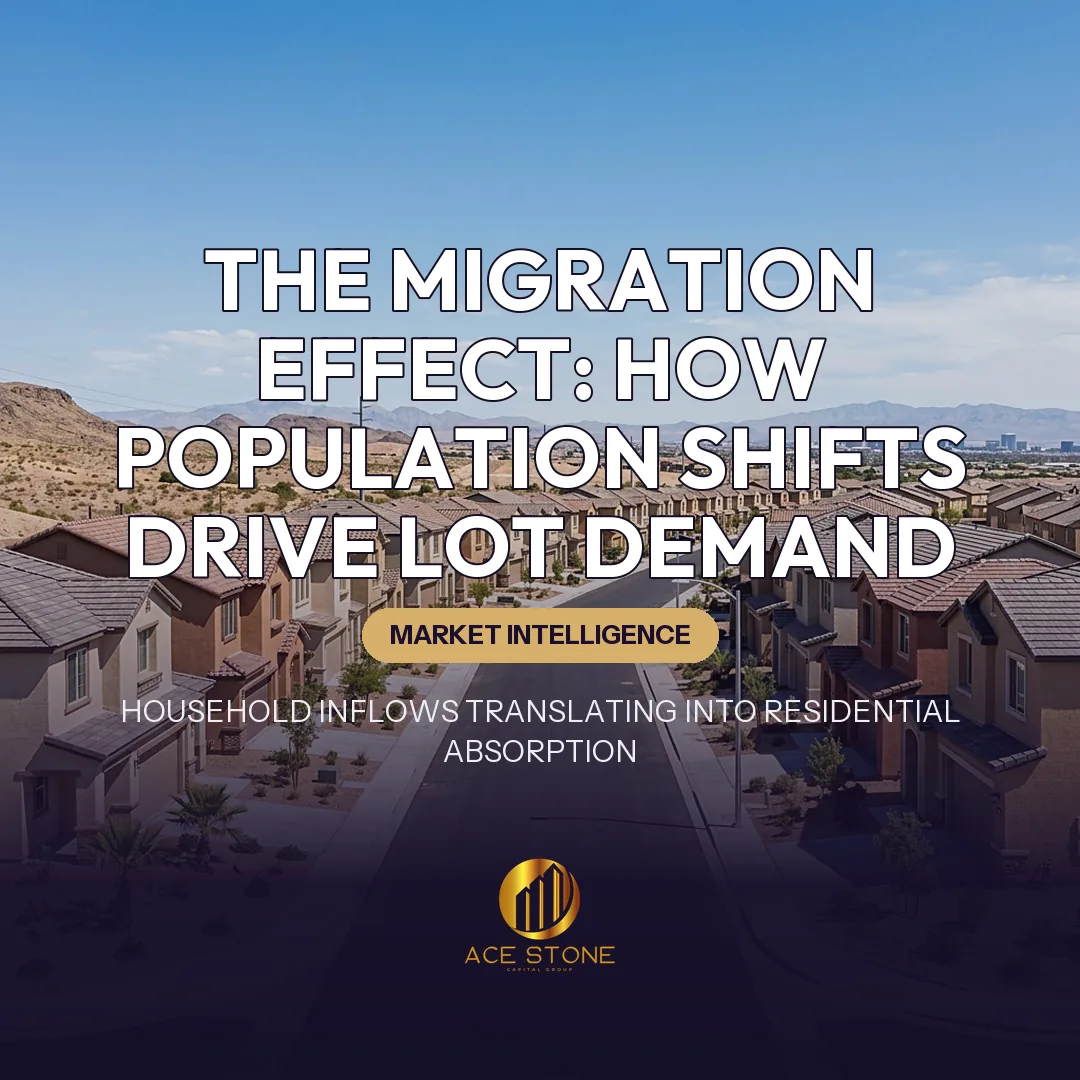
    New residential subdivision expanding at the edge of a growing Sun Belt metro.
    Representative imagery of the asset type and market — not a photograph of the subject property.

    Migration as a Capital Reallocation Mechanism

    States such as Texas, Florida, Tennessee, Arizona, North Carolina, and Georgia have experienced consistent inbound population flows driven by tax advantages, business relocation, climate preferences, and affordability differentials. Major corporate relocations and distributed workforce models have amplified these movements.

    Lot Demand Follows Rooftops

    The key implication for land investors: lot demand follows rooftops, and rooftops follow jobs. As population inflows accelerate, builders increase permit activity. Increased permits require lot inventory. When lot supply lags behind demographic growth, pricing pressure emerges upstream — at the land level.

    Applied exampleSee how this played out in Principal Acquisition: Inherited Single-Family Home, Charlotte Metro — a residential acquisition in Charlotte, NC.

    Market Evidence

    Markets including Austin's surrounding counties, Nashville's suburban expansion zones, and North Carolina's Research Triangle region illustrate this phenomenon. In these corridors, raw and partially improved lots have appreciated as housing demand outpaced new lot creation.

    Informational Advantage

    Investors who analyze migration data, building permit trends, school enrollment growth, and infrastructure expansion plans gain an informational advantage. Residential land positioned ahead of sustained migration patterns benefits from structural demand tailwinds rather than speculative timing.

    Applied exampleSee how this played out in Off-Market Residential Acquisition: Out-of-State Owner, Tampa Bay — a residential acquisition in Tampa, FL.

    Structural Thesis

    Migration is not a short-term trend. It is a capital reallocation mechanism — and land sits at its foundation.

    What This Case Shows

    A structured example of how AceStone Capital Group sources, underwrites, and structures off-market residential acquisitions in U.S. Growth Markets. For broader context, see our active acquisition markets or initiate a direct-sale review for a similar property.

    Have a Property to Sell?

    Receive a written offer or a clear pass within 1–2 business days.

    Request a Cash Offer