
Case Context
A modelled analysis of a live-work development: residential space above or behind street-facing studio, office and small-business areas. Specific properties, counterparties, and pricing are not identified.
A Phoenix live-work development — does flexible residential space with street-facing studio frontage create measurable value, or a specialized product with a thin tenant and buyer pool?
This acquisition profile examines asset strategy, underwriting method, transaction structure, and value-creation considerations. Counterparty and pricing details are not disclosed.
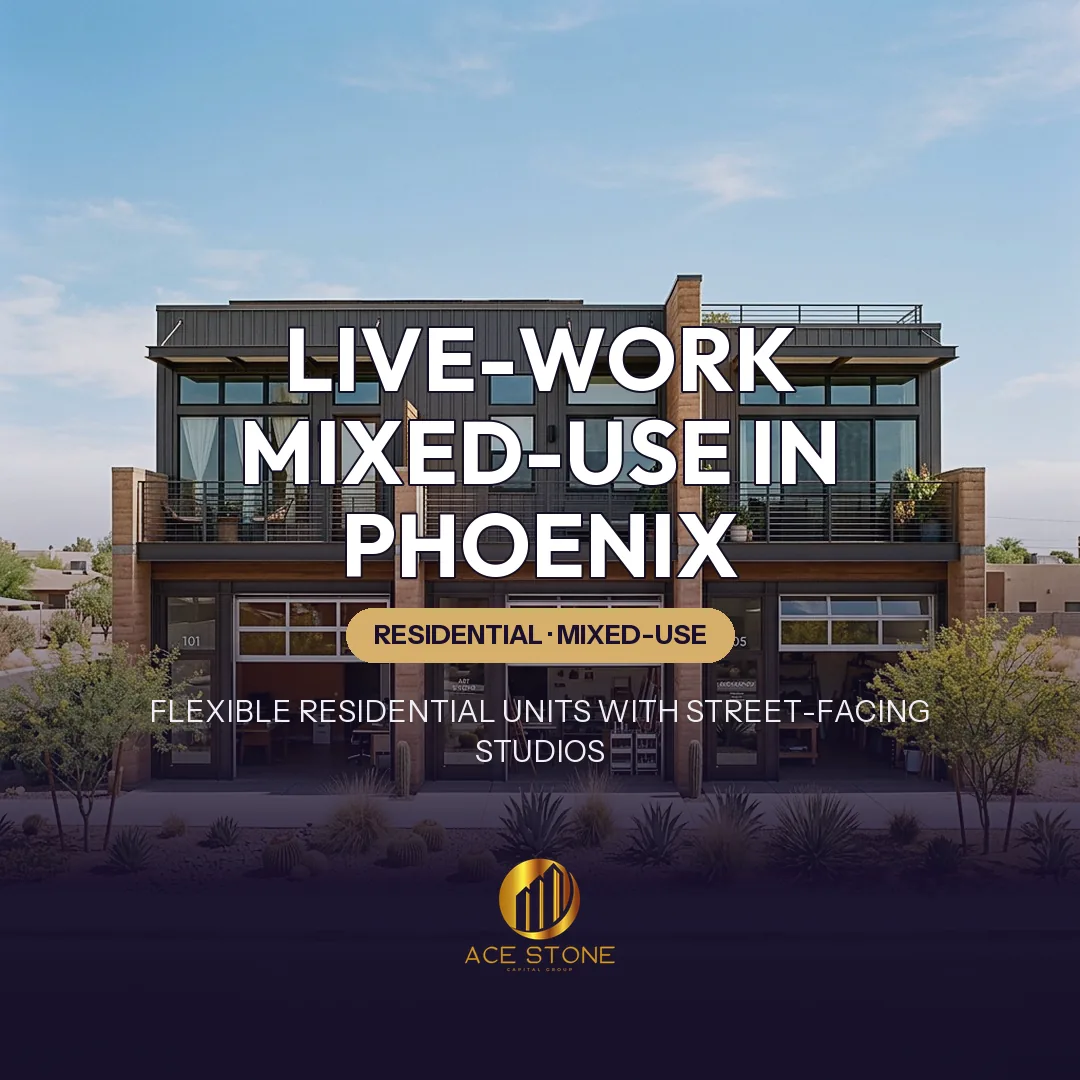
A modelled analysis of a live-work development: residential space above or behind street-facing studio, office and small-business areas. Specific properties, counterparties, and pricing are not identified.
Live-work units combine a residential dwelling with a street-accessible workspace under a single tenancy. In practice the workspace ranges from a genuine ground-floor commercial suite with its own entry and restroom to a slightly enlarged front room with a roll-up door. The distinction is not cosmetic: it determines which tenants can use the space, whether the unit can be let separately, and how an appraiser and a lender will classify the asset.
Applied exampleSee how this played out in Multifamily Acquisition: Mixed-Occupancy Eightplex, Phoenix — a residential acquisition in Phoenix, AZ.
Underwriting begins with what is legally allowed. The zoning designation, any overlay, and the certificate of occupancy define which commercial activities may operate: retail sales, client visits, signage, employee counts, hours, and whether food, fabrication or personal services are permitted. Home-occupation limits, parking requirements tied to the commercial component, and any owner-occupancy condition are confirmed in writing. A marketing brochure describing 'flexible use' is not a land-use approval.
The residential half is underwritten against conventional apartment comparables of similar size and quality in the same Phoenix submarket. This is the disciplining step: if a live-work unit cannot command at least the conventional residential rent for its habitable area, the work component is a subtraction, not an addition. Desert-market considerations — cooling load, shading, outdoor space usability and covered parking — apply as they do to any local residential asset.
Applied exampleSee how this played out in Selling an Inherited Property in Florida — a residential acquisition in Florida.
The commercial half competes with small suites, coworking memberships and the option of simply working from a conventional apartment. Realistic users are design studios, therapists, trainers, consultants, small e-commerce operations and licensed professionals needing an address and occasional client access. Each has modest rent-paying capacity and limited credit. Tenant depth is the binding constraint on this product type.
The premium is calculated as the observed spread between live-work units and comparable conventional units in the same or closely comparable buildings, expressed both in dollars and as a percentage of the incremental cost of the work space. Where the premium fails to earn a return on that incremental cost — the extra frontage, the second entry, the additional restroom, the higher parking requirement — the flexible configuration is destroying value while appearing innovative.
Applied exampleSee how this played out in Cash Offers vs. Traditional Listings: What Sellers Should Know — a residential acquisition in National.
Specialized layouts lease more slowly. The renter pool is smaller, the search is less standardized, and the marketing channels differ from conventional apartment leasing. Underwriting applies a longer marketing period and a wider vacancy factor to live-work units than to conventional units in the same building, and assumes higher turn cost where a departing business tenant has modified the space.
Mixed occupancy raises insurance cost and complicates coverage. Utility structure needs review where commercial activity draws load beyond residential norms. Additional considerations include signage maintenance, access control for units with public-facing entries during business hours, higher wear on ground-floor common areas, parking management between residents and visitors, and management priced for a hybrid tenancy rather than a standard apartment roster.
The base value is the residential value of the habitable area capitalized at the local apartment rate. The verified premium attributable to the work component is added, capitalized at a wider rate reflecting its thinner tenant pool. Capital for exterior, shading, mechanical and parking work is deducted. Where the premium cannot be verified from comparables, it is assigned no value — the space still counts as habitable area, but the flexibility earns nothing.
The exit pool for live-work product is narrower than for conventional apartments: apartment buyers discount the configuration, commercial buyers discount the residential component, and lenders may underwrite it as either with a haircut. Narrow exit liquidity is expressed as a wider assumed exit rate, which in turn requires a lower entry price for the same return.
Flexibility is only worth what a verified comparable set says a tenant will pay for it. Underwrite the residential value first, add the work premium only where the market demonstrates it, and price the narrower exit honestly.
What This Case Shows
A structured example of how AceStone Capital Group sources, underwrites, and structures off-market residential acquisitions in Phoenix, AZ. For broader context, see our active acquisition markets or initiate a direct-sale review for a similar property.
Receive a written offer or a clear pass within 1–2 business days.
Request a Cash OfferContinue Reading
Additional residential acquisitions structured through the same underwriting and closing framework.