
Density Layering
Developers increasingly pursue parcels that allow density layering — combining residential over retail or office. These formats maximize land efficiency while responding to lifestyle-driven demand.
Urban reconfiguration has shifted development emphasis toward suburban mixed-use environments. As hybrid work models persist, land supporting integrated residential, retail, and professional services formats has gained strategic importance.
This acquisition profile examines asset strategy, underwriting method, transaction structure, and value-creation considerations. Counterparty and pricing details are not disclosed.
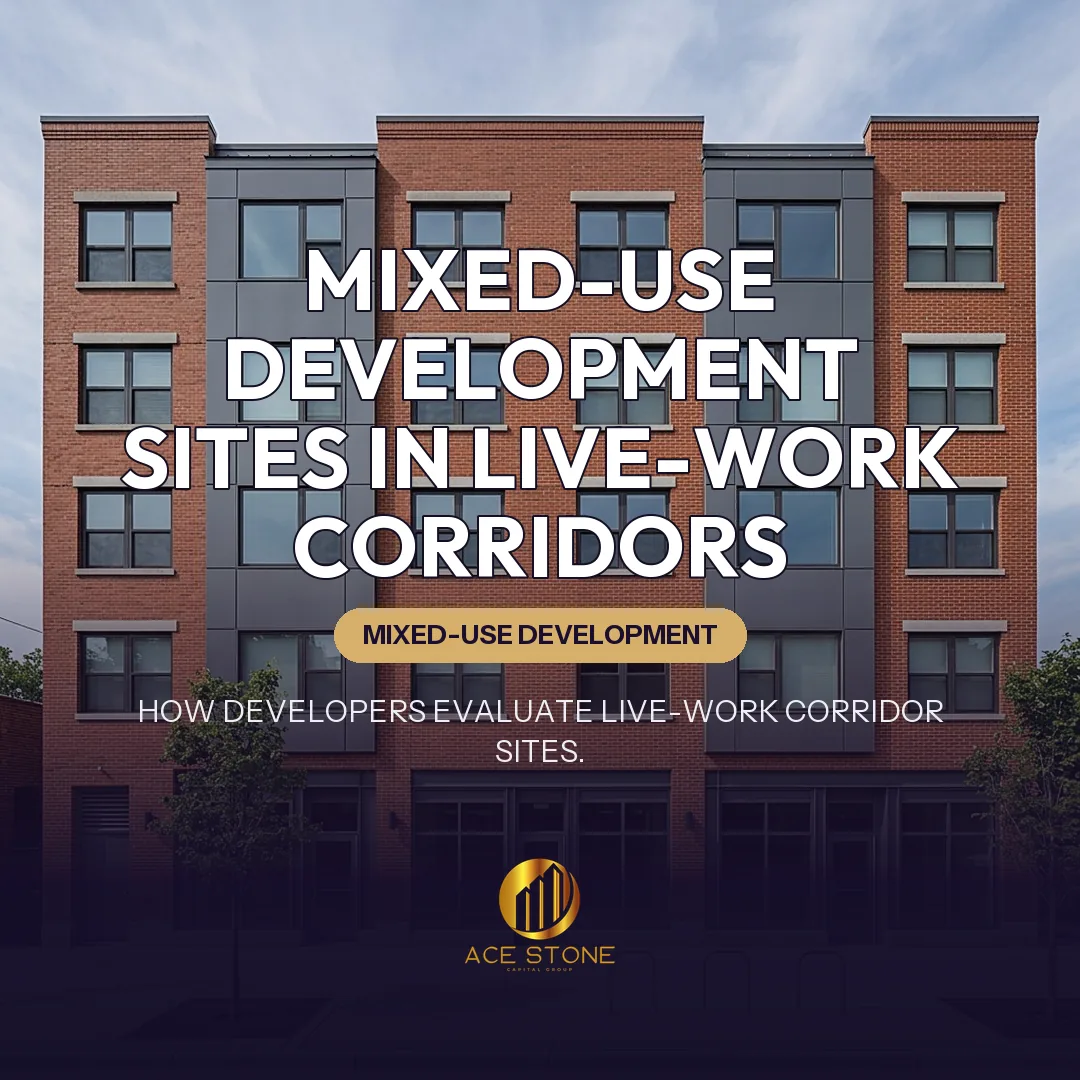
Developers increasingly pursue parcels that allow density layering — combining residential over retail or office. These formats maximize land efficiency while responding to lifestyle-driven demand.
Markets including Raleigh-Durham, Scottsdale, and suburban Atlanta demonstrate how mixed-use corridors thrive where employment clusters meet residential expansion.
Applied exampleSee how this played out in Mixed-Use Acquisition: Retail Below, Apartments Above in Charlotte — a commercial acquisition in Charlotte, NC.
The underwriting thesis for mixed-use land hinges on zoning flexibility, density allowances, and infrastructure access.
Where lifestyle and employment intersect, land value compounds.
Applied exampleSee how this played out in Vacancy as Opportunity: Repositioning a Mixed-Use Building in Tampa — a commercial acquisition in Tampa, FL.
What This Case Shows
A structured example of how AceStone Capital Group sources, underwrites, and structures off-market commercial acquisitions in U.S. Growth Markets. For broader context, see our active acquisition markets or initiate a direct-sale review for a similar property.
Receive a written offer or a clear pass within 1–2 business days.
Request a Cash OfferContinue Reading
Additional commercial acquisitions structured through the same underwriting and closing framework.