
Back
    Commercial U.S. Growth Markets March 2026

    Retail Land in Secondary Markets: A Quiet Recovery Story

    The narrative around retail real estate often focuses on contraction. However, in growing suburban markets, necessity-driven retail land remains structurally viable.

    This acquisition profile examines asset strategy, underwriting method, transaction structure, and value-creation considerations. Counterparty and pricing details are not disclosed.

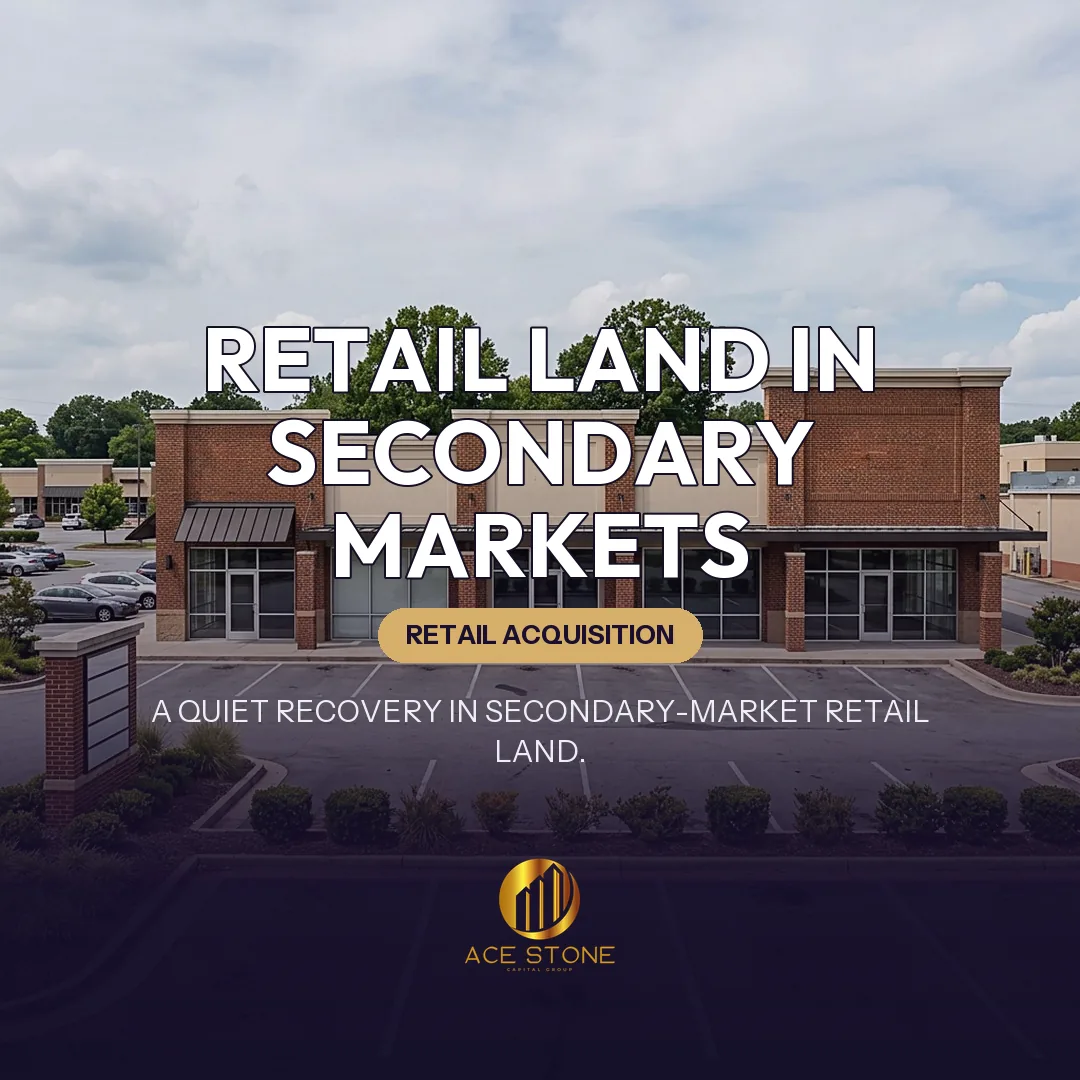
    Neighborhood retail center.
    Representative imagery of the asset type and market — not a photograph of the subject property.

    Suburban Retail Demand

    As population density increases in suburban counties across Texas, the Southeast, and Mountain West states, retail development follows rooftops. Grocery-anchored centers, healthcare-adjacent parcels, and service-based retail corridors continue expanding.

    Essential vs. Discretionary Retail

    The distinction lies between discretionary retail and daily-need retail. Land positioned for essential services — grocery, medical, quick-service restaurants — benefits from consistent demographic demand.

    Applied exampleSee how this played out in Mixed-Use Acquisition: Retail Below, Apartments Above in Charlotte — a commercial acquisition in Charlotte, NC.

    Market Evidence

    Markets such as suburban Nashville, Charlotte outskirts, and Phoenix's growth perimeters illustrate how traffic count expansion and residential density create viable retail land fundamentals.

    What This Case Shows

    A structured example of how AceStone Capital Group sources, underwrites, and structures off-market commercial acquisitions in U.S. Growth Markets. For broader context, see our active acquisition markets or initiate a direct-sale review for a similar property.

    Have a Property to Sell?

    Receive a written offer or a clear pass within 1–2 business days.

    Request a Cash Offer