
Back
    Residential Charleston, SC August 2026

    Historic Mixed-Use Acquisition: Pricing Residential Upside Under Charleston Preservation Constraints

    A Charleston historic-district building where apartments above boutique retail carry real rent upside — and preservation review reduces what a buyer can pay for it.

    This acquisition profile examines asset strategy, underwriting method, transaction structure, and value-creation considerations. Counterparty and pricing details are not disclosed.

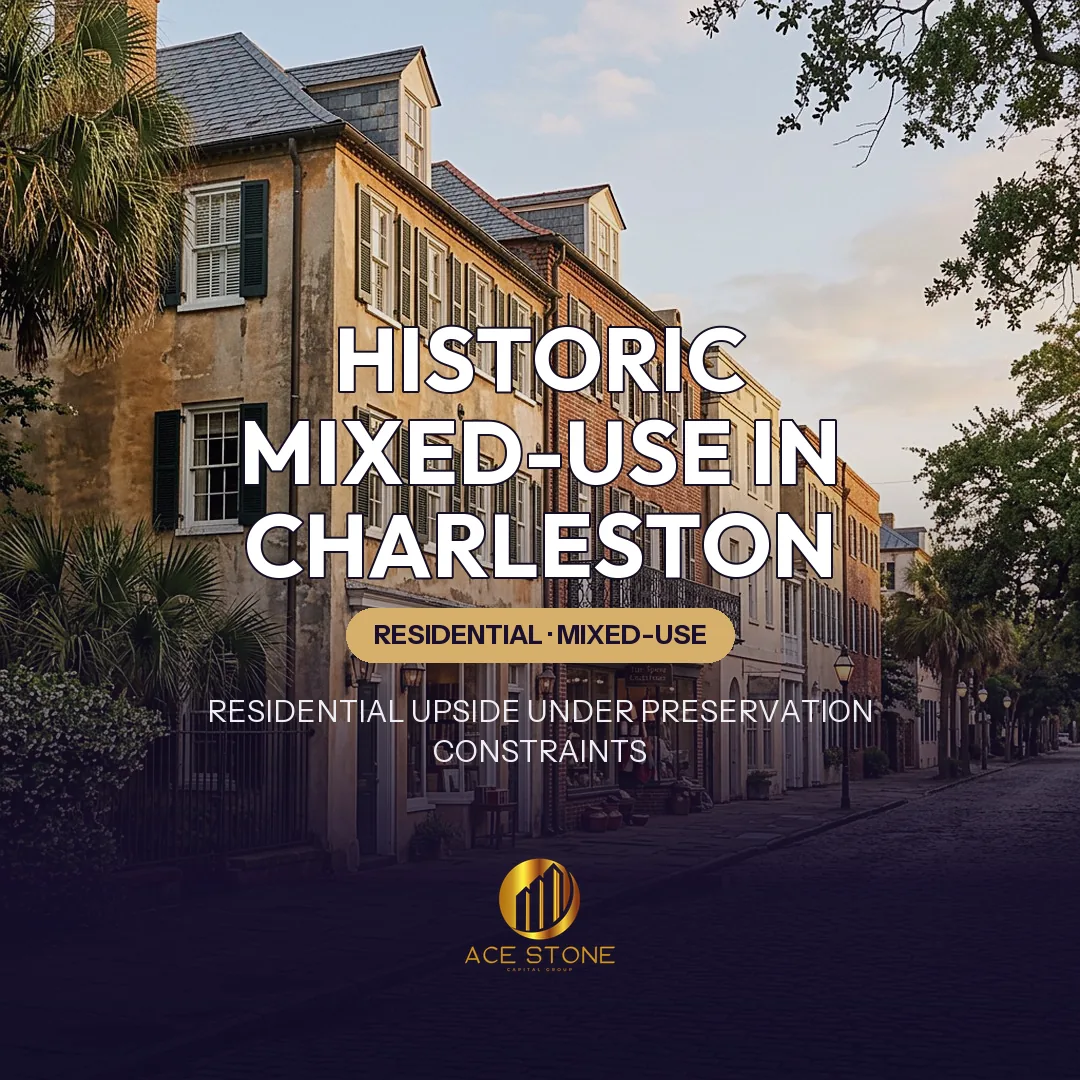
    Historic Charleston streetscape with boutique ground-floor retail and residential floors above.
    Representative imagery of the asset type and market — not a photograph of the subject property.

    Case Context

    A modelled underwriting analysis of a historic-district mixed-use building: boutique commercial space at grade, apartments above, masonry construction of considerable age. Specific properties, counterparties, and pricing are not identified.

    The Central Tension

    Historic buildings in Charleston command premium residential rents precisely because of the qualities that make them expensive and slow to renovate. Buyers routinely underwrite the premium and skip the constraint. The correct treatment is symmetrical: credit the rent premium, then charge the full cost of achieving it, including the months during which review boards, not contractors, control the schedule.

    Applied exampleSee how this played out in Why Infill Lots Are Outperforming in Growth Corridors — a residential acquisition in U.S. Growth Markets.

    Approvals and Façade Constraints

    Exterior alterations visible from the public way generally require review. Window replacement, roofing material, storefront modification, signage, mechanical placement, railings and paint colour can all fall inside that scope. The practical consequences are cost and time: custom or restored windows instead of stock units, concealed condenser placement, specified materials, and a permitting timeline measured in months. Every one of those consequences is a line in the budget rather than a note in the appendix.

    Structural and Mechanical Condition

    Diligence covers foundation and masonry condition, prior repointing quality, joist and beam capacity where floor loads change, lateral bracing, moisture intrusion, and the condition of stair and egress paths. Mechanical, electrical and plumbing systems in buildings of this vintage are frequently patched rather than replaced; the model assumes replacement of distribution serving the residential floors, not merely equipment swaps. Life-safety upgrades triggered by the scope of work are identified before, not after, the budget is set.

    Applied exampleSee how this played out in The Migration Effect: How Population Shifts Drive Lot Demand — a residential acquisition in U.S. Growth Markets.

    Insurance

    Coverage on an older masonry structure in a coastal market prices differently from a modern building, and replacement-cost estimates on a historic property can exceed market value. Wind and flood exposure, roof age, and the presence of commercial cooking or retail operations all affect the quote. Insurance is obtained as an indication during diligence rather than trended from the seller's policy, because the seller's policy reflects the seller's history, not the buyer's.

    Residential Component and Premium Rents

    The apartments — a small number of characterful units with high ceilings, original detail and courtyard or street outlooks — support rents above the general market when properly restored. The premium is real and it is capped: tenants pay for character, and they still expect functioning air conditioning, quiet mechanicals, laundry access and a secure entry. The model prices the restoration required to earn the premium rather than assuming the premium follows from age alone.

    Applied exampleSee how this played out in Path-of-Growth Markets: Where Land Appreciation Starts Early — a residential acquisition in U.S. Growth Markets.

    Commercial Tenancy

    The ground floor suits boutique retail, small hospitality or professional use. Tenant depth is decent in a strong pedestrian location and thin one block away. Leases are abstracted for term, escalation, recoveries, options, exclusive uses and any landlord restoration obligations. Where a tenant has invested in fit-out, renewal probability rises; where the landlord funded it, the reserve for the next fit-out rises instead.

    Renovation Budget and Contingency

    The capital plan separates required work — structural, systems, envelope, life safety — from discretionary work that generates rent. Contingency on historic renovation is carried at a materially higher percentage than on conventional stock, because concealed conditions are the norm rather than the exception. Carry cost during an extended permitting and construction period is included as a cost of acquisition, not treated as a financing detail.

    Acquisition Basis

    Price is set from stabilized residential income capitalized at a rate reflecting the premium submarket, plus commercial income capitalized wider, less the full restoration budget, less contingency, less carry. Because the restoration budget and timeline are both larger than for a conventional building, the residual price is lower than a comparable non-historic asset with the same stabilized income — which is the correct outcome, and the one most competing bids resist.

    Execution Risk

    The principal risks are schedule and scope. An approval cycle that extends by two quarters consumes carry and delays every rent premium in the model. A concealed structural condition can consume the contingency in a single trade. Both are addressed by basis, not optimism: the entry price must survive a scenario in which the project takes appreciably longer and costs appreciably more than planned.

    Key Takeaways

    Preservation constraints do not eliminate residential upside; they change who can afford to pursue it and at what price. A buyer who credits the premium without charging for the process is not buying a historic building — they are buying a schedule they do not control.

    What This Case Shows

    A structured example of how AceStone Capital Group sources, underwrites, and structures off-market residential acquisitions in Charleston, SC. For broader context, see our active acquisition markets or initiate a direct-sale review for a similar property.

    Have a Property to Sell?

    Receive a written offer or a clear pass within 1–2 business days.

    Request a Cash Offer