
Back
    Residential Tampa, FL August 2026

    Value-Add Mixed-Use Acquisition: Repricing Under-Rented Apartments Above Tampa Retail

    Stable ground-floor retail, apartments materially below market — an acquisition profile testing whether residential rent upside justifies renovation capital and execution risk.

    This acquisition profile examines asset strategy, underwriting method, transaction structure, and value-creation considerations. Counterparty and pricing details are not disclosed.

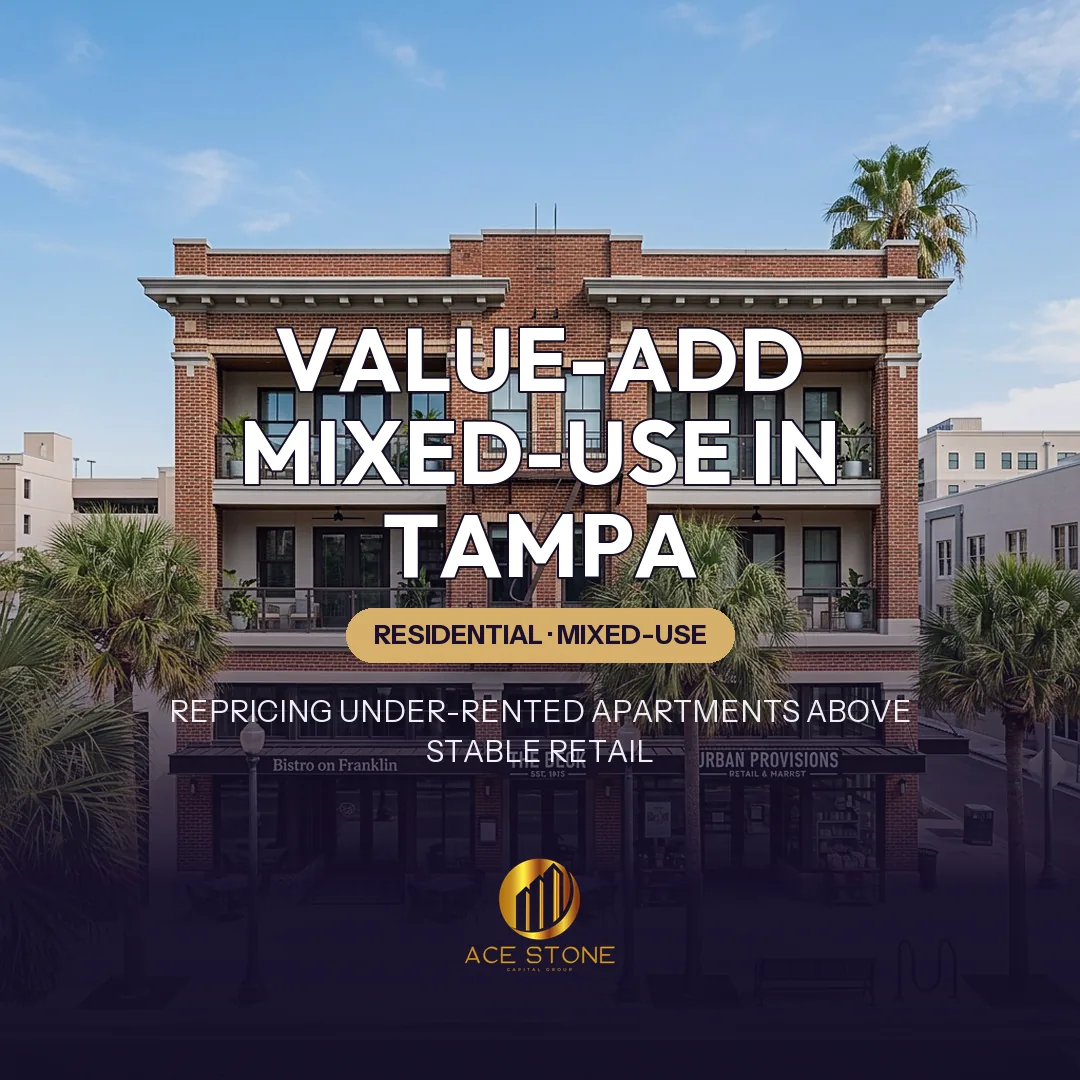
    Tampa urban mixed-use property with renovated residential upper floors above restaurant and retail frontage.
    Representative imagery of the asset type and market — not a photograph of the subject property.

    Executive Summary

    The subject asset is a Tampa building with a settled ground-floor commercial tier and ten apartments renting well below achievable levels. The commercial income is not the question here; the question is whether the residential gap is real, how much capital it costs to capture, and what yield on cost the completed programme produces relative to buying an already-stabilized property. The answer determines the price, and in many versions of this case it also determines whether to bid at all.

    Residential Rent Gap

    The gap is measured unit by unit, not as a building average. Each apartment is compared against renovated comparable units of similar size, bedroom count and floor level within the same submarket, then adjusted for the subject's finishes, appliance age, window condition, air-conditioning type and amenity set. Some units show a wide gap; a few show almost none because their current tenants already pay near market. Averaging conceals that distribution and inflates the apparent programme.

    Renovation Scope and Cost

    Three scope tiers are priced: a cosmetic refresh, a mid-tier renovation covering flooring, cabinet fronts, counters, fixtures and paint, and a full renovation adding appliances, bathroom rebuilds and mechanical replacement. Costs are carried per unit including permits where required, contractor overhead and a contingency. Common-area and exterior work — corridors, stair treatment, lighting, signage, landscaping — is budgeted separately because it supports the rent premium across the whole building rather than any single unit.

    Applied exampleSee how this played out in Code-Violation Single-Family Acquisition: Resolving Property-Level Risk in Tampa — a residential acquisition in Tampa, FL.

    Turnover Timing

    Units cannot be renovated faster than they vacate unless tenants are relocated, which is rarely economic and often unwise. The schedule is built on natural turnover plus non-renewals at lease expiry, producing a multi-year programme rather than a single renovation season. Each turn carries downtime for construction, downtime for lease-up and a marketing cost. Programmes that assume half the building turns in year one are the most reliable source of missed projections in this asset class.

    Achievable Premiums

    The premium assumed for a renovated unit is the observed spread between renovated and unrenovated comparable units, reduced by a discount for the building's structural limitations — no elevator, limited parking, smaller floor plates, or a location one block off the desirable frontage. The remaining premium is what pays for the capital. Where that reduced premium fails to clear a threshold return on the renovation dollar, the correct action is to renovate fewer units and buy at a lower price, not to assume a better market.

    Applied exampleSee how this played out in Selling an Inherited Property in Florida — a residential acquisition in Florida.

    Commercial Component

    The retail tier is underwritten as stable but not static. Leases are abstracted, escalations verified, recoveries confirmed and expirations placed on the timeline. Stability is credited by using a narrower vacancy factor, not by capitalizing the income at the residential rate. A restaurant tenant with strong hours is valuable and still concentrated risk; the reserve for its eventual replacement is carried regardless of how healthy the operation looks at diligence.

    Operating Expenses in a Florida Context

    Insurance is the line item that decides Florida mixed-use deals. Coverage is quoted for the actual structure, roof age and occupancy mix rather than trended from the seller's expiring policy, and escalation is assumed rather than hoped against. Taxes are restated on the post-sale assessment. Water and sewer, common electricity, pest control, landscaping, elevator service where present, and management complete the model, with reserves for roof and mechanical replacement.

    Stabilized NOI and Yield on Cost

    Stabilized net income assumes the renovation programme complete, premiums captured on renovated units only, unrenovated units at trended in-place rents, and the commercial tier at contract rent with a re-tenanting reserve. Yield on cost divides that figure by purchase price plus all capital plus carrying costs during the programme. That yield is then compared with the going-in rate for an already-stabilized comparable asset. If the spread is thin, the programme is not paying for its own execution risk.

    Downside Case

    Downside assumes renovation costs run over by a meaningful margin, premiums land below target, the programme takes longer than planned, insurance escalates again at renewal, and one commercial bay turns over mid-programme. The test is whether the asset still services debt and holds value at entry basis under that combination. If it does not, the basis is wrong.

    Decision Logic

    Proceed when the reduced premium, the honest turnover schedule and the fully loaded capital budget still clear the stabilized-asset spread. Reprice when the gap is real but smaller than presented. Walk when the programme depends on renovating faster than tenants leave. The residential upside is genuine in this case; the price the seller wants for it is the variable.

    Key Takeaways

    Rent gaps are earned, not inherited. Capital, downtime and execution sit between the current rent roll and the projected one, and each has a price. Tampa owners considering a sale can review the residential property acquisitions page for how we structure these reviews.

    What This Case Shows

    A structured example of how AceStone Capital Group sources, underwrites, and structures off-market residential acquisitions in Tampa, FL. For broader context, see our active acquisition markets or initiate a direct-sale review for a similar property.

    Have a Property to Sell?

    Receive a written offer or a clear pass within 1–2 business days.

    Request a Cash Offer