
Back
    Residential Charlotte, NC August 2026

    Main Street Mixed-Use Acquisition: Eight Apartments Above Neighborhood Retail in Charlotte

    A Charlotte main-street building where eight apartments carry the value and neighborhood retail supports demand without being low risk itself.

    This acquisition profile examines asset strategy, underwriting method, transaction structure, and value-creation considerations. Counterparty and pricing details are not disclosed.

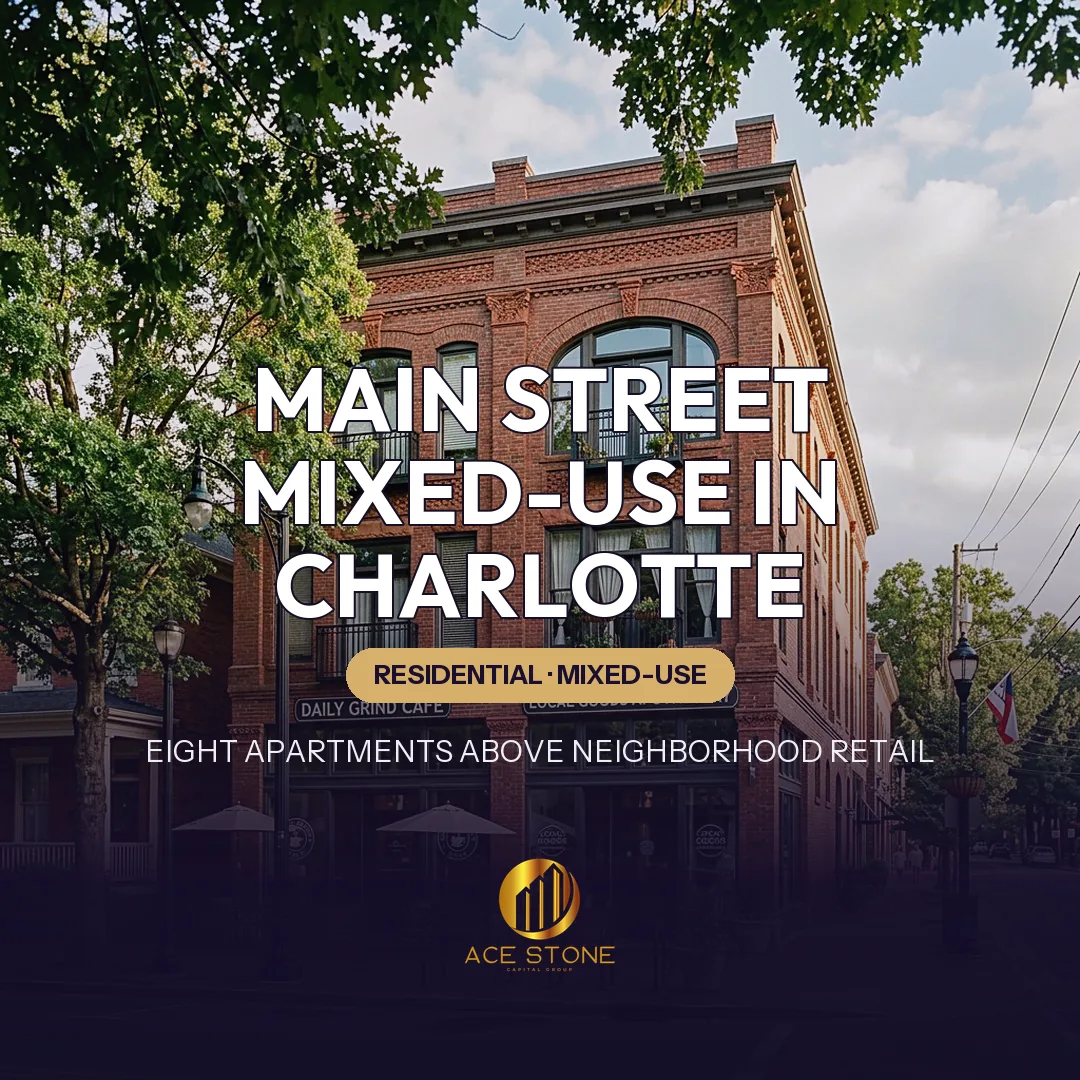
    Brick main-street mixed-use building in a revitalized Charlotte neighborhood with cafes below and apartments above.
    Representative imagery of the asset type and market — not a photograph of the subject property.

    Case Context

    An acquisition profile examining underwriting method. The profile is a four-story brick building on a revitalized Charlotte neighborhood corridor: eight apartments across the upper floors and three retail suites at grade occupied by a coffee operator, a service tenant and a small studio. Specific counterparties, addresses, and pricing are not identified.

    Why the Residential Component Leads

    Charlotte's population growth and in-migration support apartment demand across the price spectrum, and a walkable corridor location earns a rent premium over comparable product on an arterial. The eight units generate the majority of the building's income and effectively all of its predictability. The retail is what makes the block desirable to residential tenants; it is not what makes the building bankable.

    Applied exampleSee how this played out in New-Construction Duplex Acquisition: Growth-Corridor Delivery, Charlotte — a residential acquisition in Charlotte, NC.

    Property Profile

    Eight units — six one-bedrooms and two two-bedrooms — with in-unit laundry in half the stock and a shared roof deck. Three retail suites of unequal depth, one with a grease interceptor and hood already installed, which widens the tenant pool for that bay considerably. Parking is a shared rear lot with fewer spaces than a suburban standard would require, plus on-street supply. Elevator service is absent, which caps achievable rent on the top floor.

    Residential Rent Analysis

    Achievable rents are set from renovated comparable units within a short walk, adjusted for the absence of an elevator, the smaller unit sizes and the presence of in-unit laundry where it exists. In-place rents sit modestly below that band. The plan assumes a normal turnover rate, a light refresh at each turn rather than a full renovation, and a rent premium that reflects the refresh rather than a gut scope. Overreaching on residential rent is the most common error on this asset type.

    Applied exampleSee how this played out in Occupied Multifamily Acquisition: Five-Unit Property, Charlotte — a residential acquisition in Charlotte, NC.

    Retail Tenant Quality and Lease Expirations

    Tenant quality is assessed on operating history, sales performance where reported, category durability and guarantee structure — not on how appealing the storefront looks. Two of the three leases expire inside the first half of the hold period. Each expiration carries assumed downtime, an improvement allowance sized to the likely replacement use, and a commission. A café that anchors the corner's foot traffic is valuable to the residential story and still capable of closing; both facts are held simultaneously.

    Separate NOI Construction

    Residential net income is built from unit rents less residential vacancy, credit loss, turn costs, management and an allocated share of building expenses. Commercial net income is built from base rent plus recoveries, less commercial vacancy, an allocated expense share and a re-tenanting reserve. Expense allocation follows metering and square footage rather than convenience. The two figures are reported separately and only then summed for a stabilized total.

    Applied exampleSee how this played out in Selling an Inherited Property in Florida — a residential acquisition in Florida.

    Operating Costs and Parking

    Taxes are restated post-sale. Insurance reflects mixed occupancy and the presence of cooking operations. Common-area electricity, water and sewer, landscaping, lot maintenance and striping, trash — including commercial-volume pickups a residential-only budget would understate — and management at a hybrid rate all appear. Parking is treated as an expense and an operational constraint, not as a revenue line, because charging residents for scarce spaces that retail customers also want tends to cost more in resident satisfaction than it earns.

    Neighborhood Trajectory

    Surrounding development matters, but only when it is under construction rather than announced. Permitted projects within a short radius are counted; conceptual plans are not. New apartment supply nearby is treated as competition for the residential stream and as potential customer growth for the retail stream — the same project affects the two components in opposite directions, which is another argument for underwriting them apart.

    Acquisition Basis and Exit Value

    Residential income is capitalized at the local apartment rate; retail income at a wider rate reflecting a three-bay corridor property with limited parking. Capital for roof, HVAC replacements and unit refreshes is deducted. Exit value is tested at a rate wider than entry, with the residential component stabilized and the retail component assumed to be mid-lease rather than freshly signed. A deal that only clears when the exit rate is tighter than the entry rate is not a deal.

    Key Risks

    Concentrated retail rollover in a single year. A local operator whose guarantee has already expired. Parking scarcity limiting both residential rent and retail tenant selection. Assessment step-up at closing. Over-renovating apartments beyond what the corridor will pay for. Each risk is priced into the basis rather than listed in a memo and forgotten.

    Key Takeaways

    Neighborhood retail can raise residential desirability and remain the riskiest income in the building. Price the apartments for what they are — durable, repeatable and financeable — and price the storefronts for what they are: episodic, capital-hungry and slow to replace. Related Charlotte analyses appear throughout our case study library.

    What This Case Shows

    A structured example of how AceStone Capital Group sources, underwrites, and structures off-market residential acquisitions in Charlotte, NC. For broader context, see our active acquisition markets or initiate a direct-sale review for a similar property.

    Have a Property to Sell?

    Receive a written offer or a clear pass within 1–2 business days.

    Request a Cash Offer