
Back
    Residential Central Florida March 2026

    Inherited Rental Portfolio: Nine Properties, Central Florida

    An acquisition profile examining how nine inherited Central Florida rental homes held by multiple beneficiaries would be evaluated as one coordinated disposition.

    This acquisition profile examines asset strategy, underwriting method, transaction structure, and value-creation considerations. Counterparty and pricing details are not disclosed.

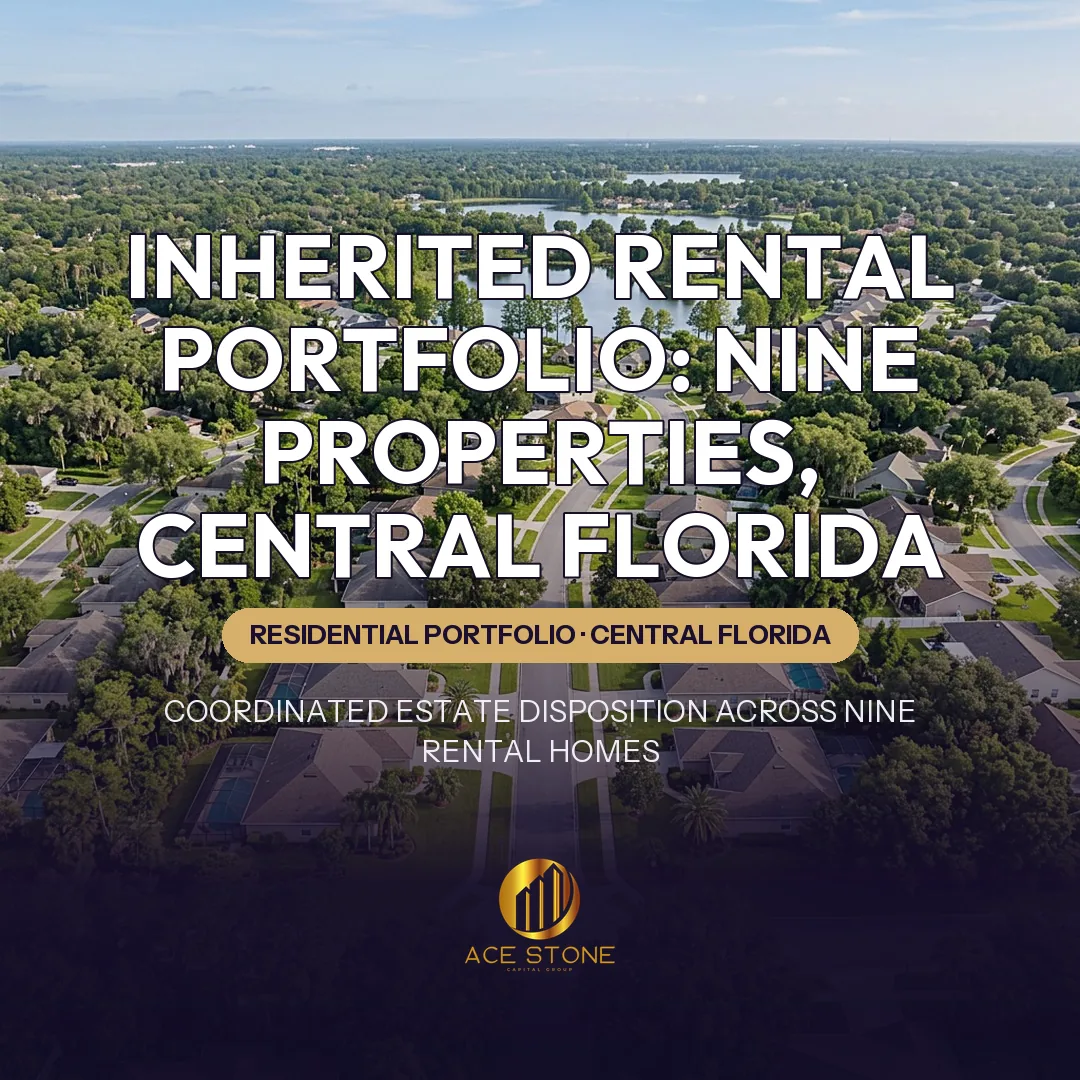
    Aerial view of mature Central Florida residential streets with established homes and heavy tree cover.
    Representative imagery of the asset type and market — not a photograph of the subject property.

    Case Context

    This acquisition profile considers an estate holding nine rental homes across Central Florida, with several beneficiaries holding differing interests and objectives. It sets out AceStone Capital Group's underwriting methodology. AceStone Capital Group does not provide legal, tax, or estate advice. Specific properties, counterparties, and pricing are not identified.

    Ownership Situation

    Estates that hold rental property frequently combine incomplete records with active operations. Leases may be verbal or expired into month-to-month status, rent may have been collected informally, deposits may not be segregated, and maintenance history may exist only in the memory of a long-standing contractor. Beneficiaries are often geographically dispersed and may not agree on whether to hold or sell.

    Applied exampleSee how this played out in Why Infill Lots Are Outperforming in Growth Corridors — a residential acquisition in U.S. Growth Markets.

    Records and Verification

    Underwriting begins by reconstructing the operating record from available evidence: bank deposit history, tax filings, utility accounts, insurance declarations, county tax records, and any written leases. Where records are incomplete, occupancy and rent are verified through direct estoppel confirmation rather than accepted from a summary schedule.

    Title and Estate Coordination

    At a general level, an estate disposition requires that authority to convey is established and that each parcel's chain of title reflects the decedent's interest correctly. Coordination across nine parcels may involve differing vesting, homestead considerations on any owner-occupied asset, and confirmation of who is authorized to execute. These matters are handled by the estate's own counsel; the acquisition analysis simply prices the time and uncertainty they introduce.

    Applied exampleSee how this played out in The Migration Effect: How Population Shifts Drive Lot Demand — a residential acquisition in U.S. Growth Markets.

    Property-Level Valuation

    Each home is valued independently: submarket comparables, condition and deferred maintenance, roof and mechanical age, lease status and tenant tenure, tax assessment, and insurance eligibility. Central Florida portfolios frequently mix older inner-ring housing stock with later suburban product, producing materially different value drivers within the same estate.

    Coordinated Disposition Versus Separate Sales

    Nine separate retail sales would require nine listings, nine sets of tenant coordination or vacancies, nine inspection and repair negotiations, and a disposition period likely measured in quarters rather than weeks — during which carry, management, and beneficiary coordination continue. One coordinated portfolio disposition compresses that into a single decision, a single closing sequence, and a single net figure for distribution.

    Applied exampleSee how this played out in Path-of-Growth Markets: Where Land Appreciation Starts Early — a residential acquisition in U.S. Growth Markets.

    Risks Identified

    Risks include unverifiable rent history, deposits that cannot be reconciled, unpermitted improvements discovered at inspection, beneficiary disagreement delaying execution, and title curative on older parcels where prior conveyances were informally documented.

    Key Takeaway

    Portfolio consolidation can materially simplify execution when multiple inherited rental properties would otherwise require separate dispositions, provided authority to convey and property-level condition are verified rather than assumed.

    Conclusion

    Estates holding operating rentals face a coordination problem as much as a valuation problem. This analysis reflects how that problem is underwritten.

    What This Case Shows

    A structured example of how AceStone Capital Group sources, underwrites, and structures off-market residential acquisitions in Central Florida. For broader context, see our active acquisition markets or initiate a direct-sale review for a similar property.

    Have a Property to Sell?

    Receive a written offer or a clear pass within 1–2 business days.

    Request a Cash Offer