
Back
    Residential North Carolina July 2026

    New-Construction Rental Portfolio: Eighteen Homes Delivered in North Carolina

    An acquisition profile examining eighteen newly delivered North Carolina rental homes acquired from a builder, and the risks new construction does not eliminate.

    This acquisition profile examines asset strategy, underwriting method, transaction structure, and value-creation considerations. Counterparty and pricing details are not disclosed.

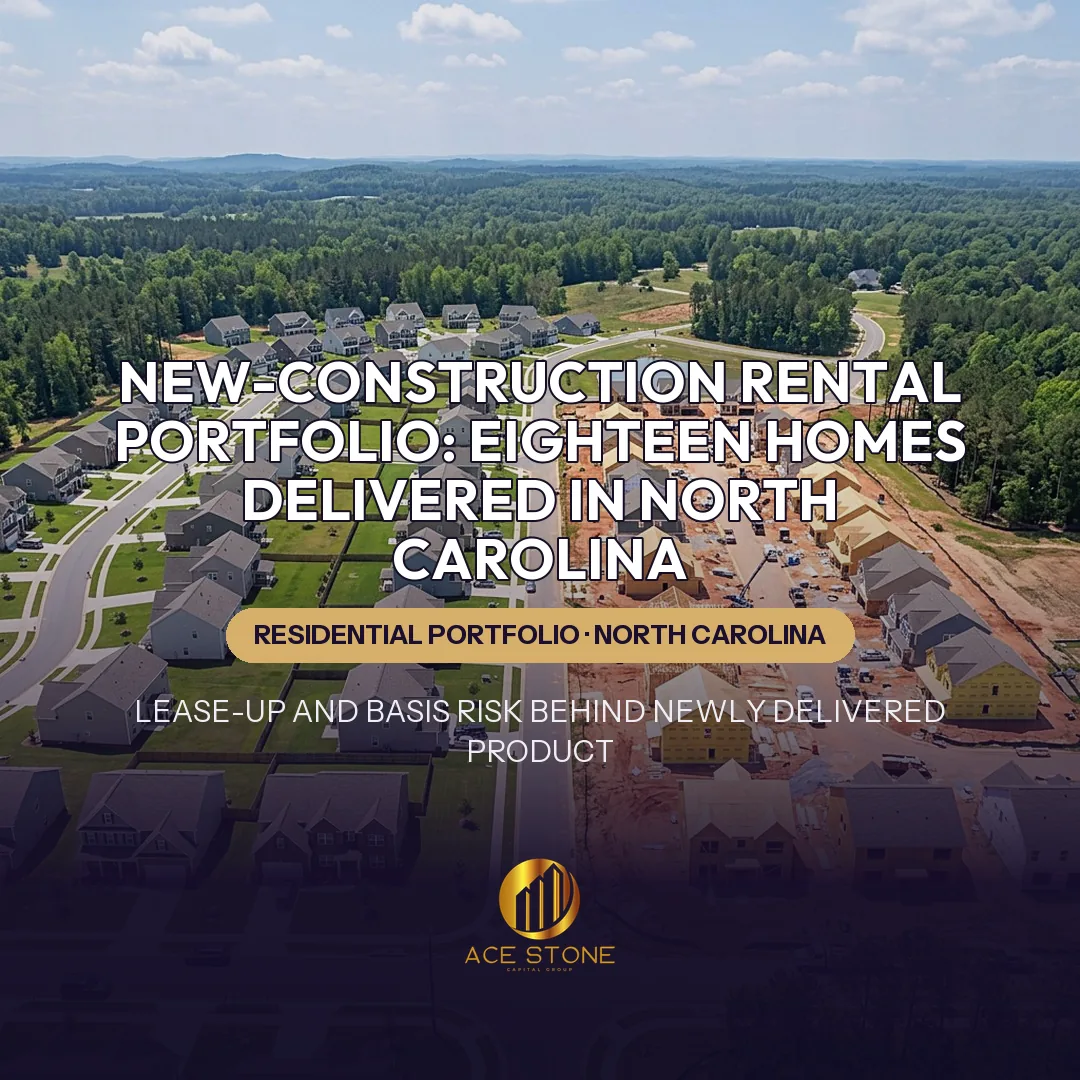
    Drone view of a recently completed North Carolina residential community beside an active construction phase.
    Representative imagery of the asset type and market — not a photograph of the subject property.

    Case Context

    This acquisition profile examines a package of eighteen newly completed rental homes offered by a builder in a North Carolina growth market. It sets out AceStone Capital Group's underwriting methodology. Specific counterparties and pricing are not identified.

    Delivery and Completion Verification

    Diligence begins with completion status. Certificates of occupancy are verified per address, punch lists are reviewed against the builder's scope, final inspections and utility activations are confirmed, and any homes still in the final phase are separated from those genuinely delivered. Partial delivery changes both risk and funding structure.

    Applied exampleSee how this played out in Why Infill Lots Are Outperforming in Growth Corridors — a residential acquisition in U.S. Growth Markets.

    Construction Quality and Warranty

    New does not mean verified. Third-party inspection is performed on a meaningful sample regardless of builder reputation, with attention to drainage and grading, roof detailing, envelope and flashing, mechanical sizing, and crawlspace or slab condition depending on the regional foundation type. Warranty terms are reviewed for scope, duration, transferability to a subsequent owner, and the builder's capacity to perform.

    Lease-Up and Absorption

    Eighteen simultaneous vacant homes require absorption. Underwriting models weekly leasing pace against demonstrated absorption in comparable communities, accounts for seasonality in the local leasing calendar, and prices concessions realistically where competing new supply is leasing at the same time. Simultaneous delivery is a concentration of lease-up risk, not a series of independent lease-ups.

    Applied exampleSee how this played out in The Migration Effect: How Population Shifts Drive Lot Demand — a residential acquisition in U.S. Growth Markets.

    Post-Completion Expense Reset

    Taxes assessed on land or partially complete improvements will reset upon completion and transfer, frequently well above the builder's carrying assessment. Insurance is bound on completed, tenant-occupied dwellings rather than under a builder's risk policy. Management must be established from zero, including staffing, systems, and vendor onboarding.

    Absence of Operating History

    There is no trailing operating statement to test. Expense assumptions must therefore be built from comparable operating portfolios in the same market rather than from property history, and the underwriting should carry a wider variance band on maintenance, turnover, and bad debt during the first full year.

    Applied exampleSee how this played out in Path-of-Growth Markets: Where Land Appreciation Starts Early — a residential acquisition in U.S. Growth Markets.

    Stabilized Versus Unstabilized Valuation

    The homes are worth their stabilized value less the cost and time to achieve stabilization: absorption period revenue loss, leasing costs, concessions, carry, and the risk that the lease-up assumption proves optimistic. Paying a stabilized price for unstabilized product is the central pricing error in builder packages.

    Key Takeaway

    New construction reduces certain physical risks but introduces lease-up, operating-history, absorption, and basis risks. The risk profile changes shape; it does not disappear.

    Conclusion

    Builder packages reward buyers who underwrite the lease-up rather than the finish quality. This analysis is modelled ; no specific transaction is described.

    What This Case Shows

    A structured example of how AceStone Capital Group sources, underwrites, and structures off-market residential acquisitions in North Carolina. For broader context, see our active acquisition markets or initiate a direct-sale review for a similar property.

    Have a Property to Sell?

    Receive a written offer or a clear pass within 1–2 business days.

    Request a Cash Offer