
Case Context
This acquisition profile focuses specifically on physical-condition underwriting for a two-unit property in Columbus. It sets out AceStone Capital Group's underwriting methodology; specific counterparties and pricing are not identified.
A modelled physical-condition underwriting review of a Columbus duplex, and how deferred maintenance changes the price an asset can support rather than merely the repair budget.
This acquisition profile examines asset strategy, underwriting method, transaction structure, and value-creation considerations. Counterparty and pricing details are not disclosed.
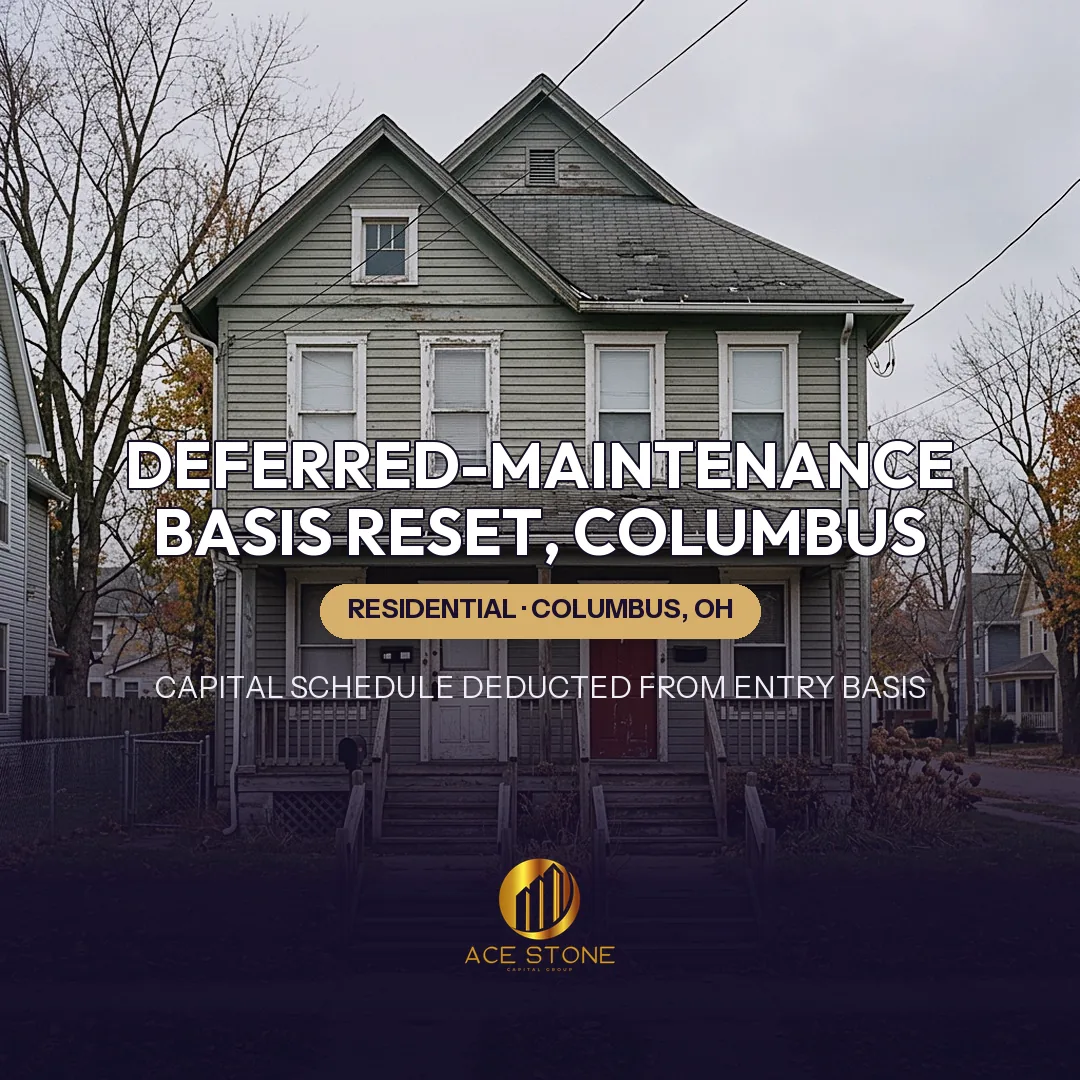
This acquisition profile focuses specifically on physical-condition underwriting for a two-unit property in Columbus. It sets out AceStone Capital Group's underwriting methodology; specific counterparties and pricing are not identified.
The subject profile is a structurally sound duplex of mid-century vintage carrying multiple building systems at or beyond expected service life. The building operates, both sides are habitable, and the income statement looks ordinary. The analytical question is not whether the property can be repaired but what price it can support once the repair schedule is treated as a certainty rather than a contingency.
Applied exampleSee how this played out in Tenant-Occupied Single-Family Acquisition: Evaluating an Existing Lease in Columbus — a residential acquisition in Columbus, OH.
Roof review establishes covering type, installed age, layer count, decking condition where observable, flashing and penetration detail, and gutter and downspout discharge away from the foundation. An envelope at end of life is not a maintenance item; it is a scheduled capital event with a known cost and a narrow timing window, and it must be funded from basis rather than from future cash flow.
Each unit's heating and cooling equipment is dated by serial and assessed for configuration, combustion safety where applicable, ductwork condition, and whether the two units share equipment. Water heaters are dated individually. In a two-unit building, mechanical failure in one unit interrupts half the revenue, so remaining life is modelled per unit rather than averaged across the property.
Applied exampleSee how this played out in Selling an Inherited Property in Florida — a residential acquisition in Florida.
Plumbing review covers supply material, drain and waste condition, evidence of prior repair, and the service line from the main. Electrical review covers service capacity, panel type and known problem manufacturers, branch wiring type, grounding, and the presence of any work performed without permit. Items in these categories are frequently the difference between a cosmetic turn and a rental unit that cannot pass inspection.
Each unit is scoped for the work required to reach a leasable standard at the target rent: flooring, paint, cabinetry and countertop condition, appliance presence and age, bathroom fixtures and surrounds, and any accessibility or life-safety item such as smoke and carbon monoxide detection. Turnover scope is separated from capital scope so that the two are not double counted or, more commonly, conflated and understated.
Applied exampleSee how this played out in Cash Offers vs. Traditional Listings: What Sellers Should Know — a residential acquisition in National.
Sequencing determines revenue interruption. Envelope and mechanical work can often proceed with tenants in place; interior turnover cannot. A sequenced plan places disruptive interior work at natural lease expirations and completes exterior and system work first, so that the building does not lose both revenue streams simultaneously. Where sequencing is impossible, the lost revenue is added to the cost of the work.
Items with remaining life measured in months rather than years are funded at closing as immediate reserves rather than carried as ongoing maintenance. This distinction matters because a reserve funded from basis is a price adjustment, while a reserve assumed to come from operations is a claim on cash flow that the income statement has not yet demonstrated it can support.
Stabilized value is established first from post-rehabilitation income and comparable two-unit sales. From that figure the analysis deducts the full capital schedule, the turnover scope, revenue interruption during the work, and a contingency scaled to the age of the building and the number of systems being opened. The residual is the acquisition basis the asset can support, which will sit materially below a price derived from the building's current in-place income.
The principal risks are concealed condition behind finished surfaces, scope expansion once systems are opened, contractor availability, permit and inspection timing with the local authority, and tenant relations during an extended work period in an occupied building.
Deferred maintenance is not merely a repair estimate; it changes the price the asset can support. Treating the capital schedule as a deduction from basis rather than as a future operating problem is what separates a durable acquisition from a distressed one.
A structurally sound building with tired systems is a legitimate acquisition candidate when the capital schedule is priced into the entry rather than deferred. The analysis above reflects AceStone Capital Group's underwriting posture. Specific properties, counterparties, and pricing are not identified.
What This Case Shows
A structured example of how AceStone Capital Group sources, underwrites, and structures off-market residential acquisitions in Columbus, OH. For broader context, see our active acquisition markets or initiate a direct-sale review for a similar property.
Receive a written offer or a clear pass within 1–2 business days.
Request a Cash OfferContinue Reading
Additional residential acquisitions structured through the same underwriting and closing framework.